A Couple Who Built a World
In 1919, Chicago artist Frederic Clay Bartlett inherited a strip of barrier-island land between the Atlantic Ocean and the Intracoastal Waterway — a gift from his father-in-law, Hugh Taylor Birch. Bartlett named the property after the bonnet lily that bloomed in the freshwater slough on the grounds, and over the following decades he and his second wife, Evelyn, turned the 35 acres into something that defied every surrounding development impulse: a personal paradise of art studios, orchid houses, animal enclosures and subtropical gardens, all threaded together by hand-built pathways and the unhurried logic of two artists who actually lived here.
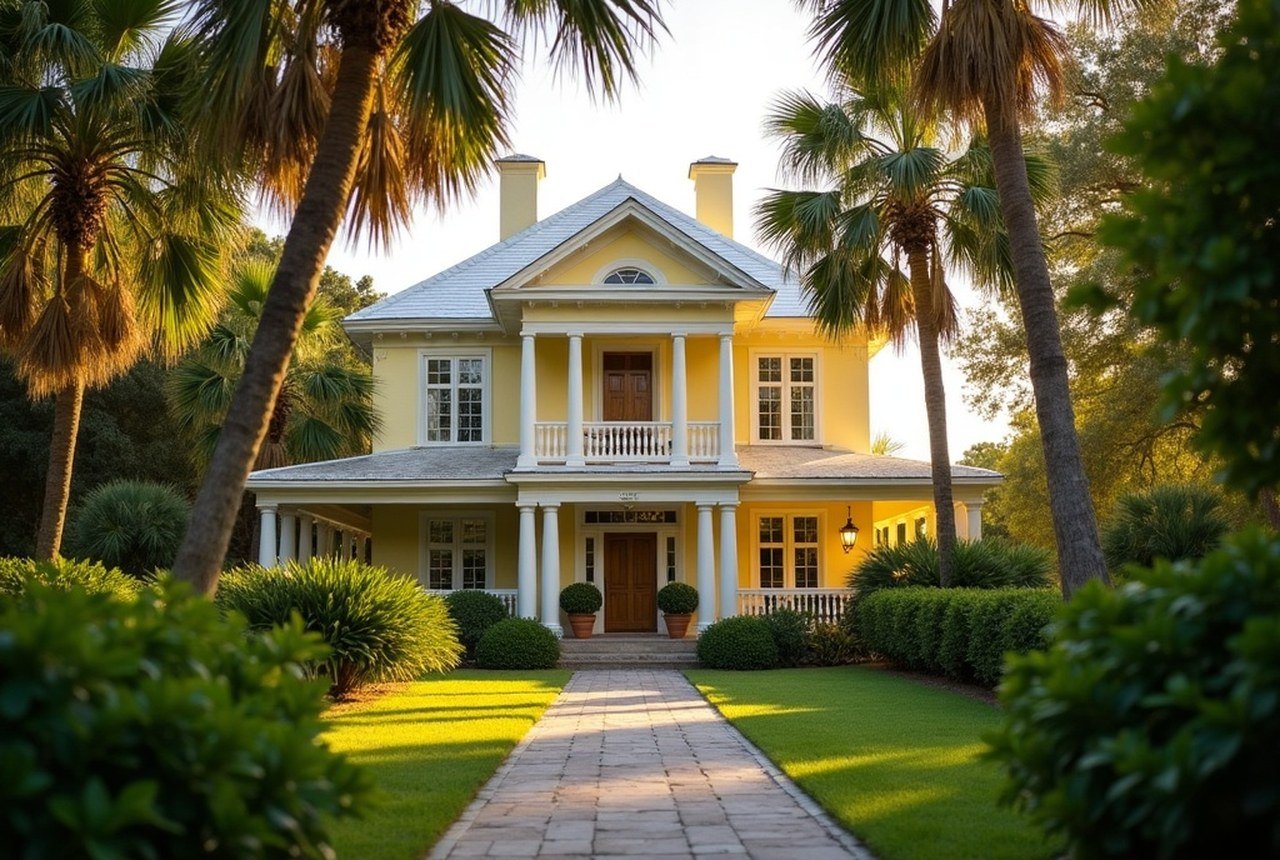
The main house — a Plantation-revival structure of pale yellow, assembled informally over the years rather than designed all at once — sits at the center of a compound that grew organically around the Bartletts' enthusiasms. Frederic painted murals directly onto interior walls and ceilings. Evelyn, who married Frederic in 1931 and was herself a painter and collector of genuine accomplishment, kept a studio on the property and amassed a collection of seashells, antique dolls and folk art that now fills several rooms with the particular density of a life lived looking hard at beautiful things.
What Survives, and Why It Matters
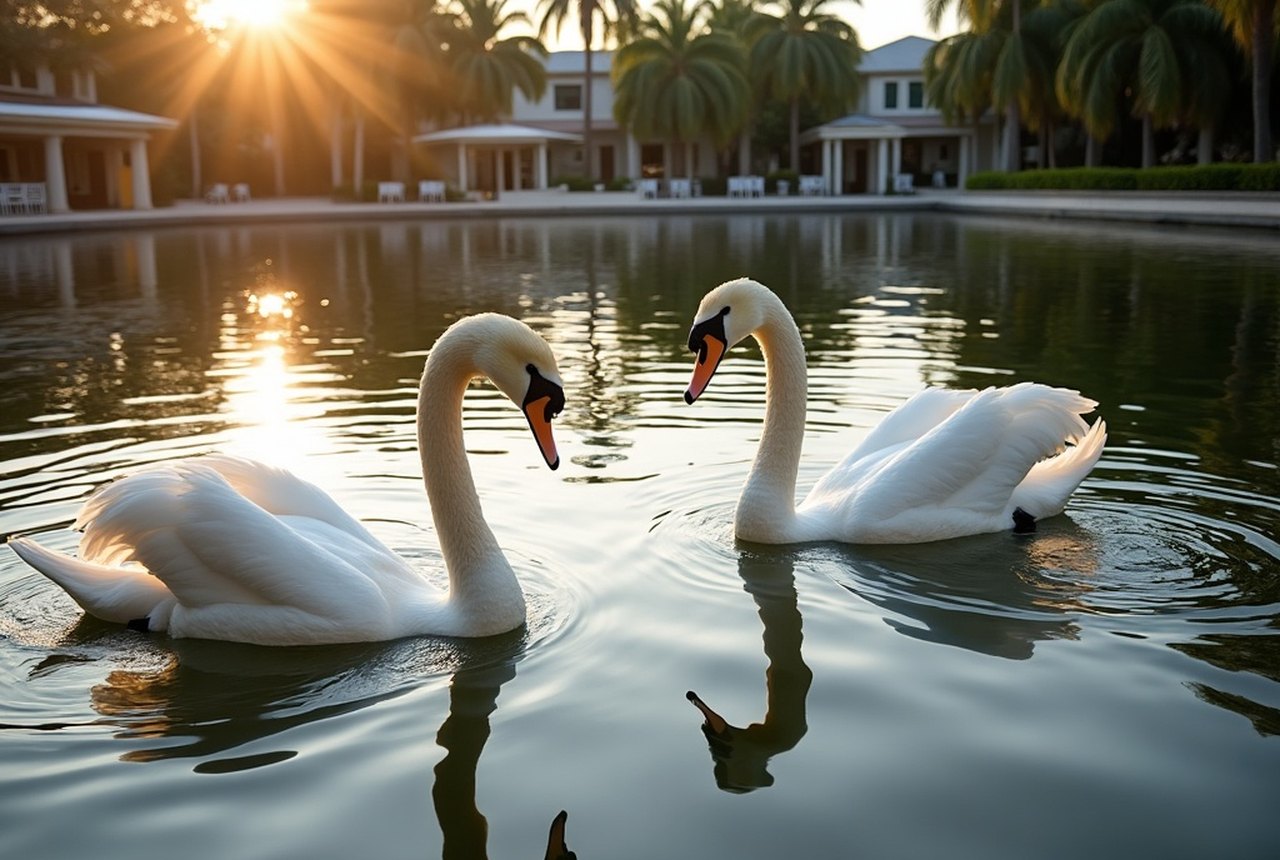
What makes Bonnet House startling is context. To its north and south, Fort Lauderdale Beach's high-rise corridor carries on without apology. Step through the estate gates on Seabreeze Boulevard and the city disappears — not metaphorically, but genuinely. Old-growth trees close overhead. A freshwater marsh reflects sky. The swan pond holds swans that are direct descendants of birds the Bartletts kept. An orchid house shelters one of the most extensive collections in South Florida, tended through donations and volunteer labor since the estate became a museum.
Evelyn Bartlett is the reason any of this still exists. After Frederic's death in 1953, she stayed on, quietly refusing every developer who came calling. She was, by the time she died in 1997 at the age of 109, the last surviving link to a Fort Lauderdale that pre-dated the postwar building rush. Before her death she transferred the property to the Florida Trust for Historic Preservation, ensuring that Bonnet House Museum & Gardens — listed on the National Register of Historic Places — would remain intact and open to the public.
The estate's survival is also a civic story. During the land boom of the 1920s and through the postwar decades when Broward County's coastline was being subdivided and concreted at speed, this particular stretch held simply because the Bartletts owned it outright and had no interest in selling. No government intervention saved it — just ownership, stubbornness and long life.

Visiting Well
Guided tours of the house are the recommended entry point, and genuinely reward attention. Docents can distinguish between Frederic's work and Evelyn's, and can explain why certain rooms look deliberately unfinished — because they were, by design, works in progress. The collections inside are museum-quality without the museum distance; Evelyn arranged things to be lived with, not looked at through glass.
The grounds are accessible without a house tour and repay slow walking. Look for the South Florida slash pine and native gumbo-limbo trees that have been here longer than the house; for the free-ranging monkeys that have colonized the property's canopy (a colony established decades ago and now a well-documented local peculiarity); and for the dune vegetation along the Atlantic-facing edge, one of the last undisturbed coastal hammock stretches on this part of the barrier island.
The Bonnet House sits on Seabreeze Boulevard just north of Las Olas Boulevard — close enough to the beach strip to reach on foot, far enough in spirit to feel like a different century. Give it half a day. The orchid house alone is worth the admission.
The chronology
- 1919Frederic Clay Bartlett inherits barrier-island land from Hugh Taylor Birch
- 1931Frederic marries Evelyn, who becomes the estate's co-creator and eventual guardian
- 1953Frederic Bartlett dies; Evelyn remains on the property alone
- 1997Evelyn Bartlett dies at 109; property transferred to Florida Trust for Historic Preservation